

Trusted Deaddiction Centre in Chennai for Long-Term Recovery
Introduction:
Deaddiction centre in Chennai provides hope when addiction feels impossible to overcome. Indeed, addiction affects physical health, mental balance, and close relationships. However, recovery is always achievable with timely and professional care. Moreover, early support improves long-term success rates. Importantly, addiction develops gradually, not suddenly, which makes expert intervention essential. As a result, professional treatment increases recovery chances, while trusted centres create a safe, structured, and supportive environment for lasting healing.
Table of Contents:
- Understanding Addiction as a Long-Term Issue
- Why Getting Help Early Matters
- Supporting Mental Health During Recovery
- Helping Families Learn and Heal
- Following a Daily Routine
- Eating Well and Staying Active
- Healing the Mind and Body Together
- Preventing Relapse and Handling Triggers
- Support from Peers and Group Therapy
- Easing Back into Everyday Life
- Career and Life Stability
- Regular Check-Ups and Follow-Up Care
- Addressing stigma and rebuilding Confidence
- Why Local Treatment is Helpful
- Benefits of Professional Care for the Long Run
- Simple Tips to Stay Sober Long-Term
1. Understanding Addiction as a Long-Term Issue:
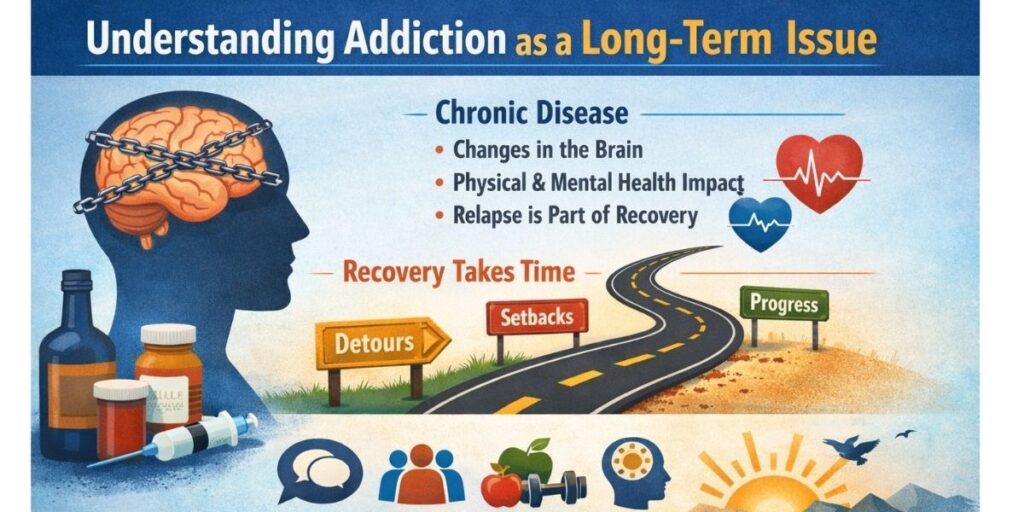
Addiction is a chronic health condition.
- It develops slowly over months or years.
- It affects brain chemistry and decision-making.
- Willpower alone is often not enough.
- Also, a professional deaddiction centre in Chennai treats addiction medically.
- Patients feel less fear and shame.
- Recovery becomes possible and structured.
2.Why Getting Help Early Matters:
- Early treatment is crucial – Right, addressing addiction promptly improves chances of success.
- Addiction worsens without help – Moreover, physical and mental health can decline rapidly.
- Relationships and work suffer – Personal and professional life are also negatively affected.
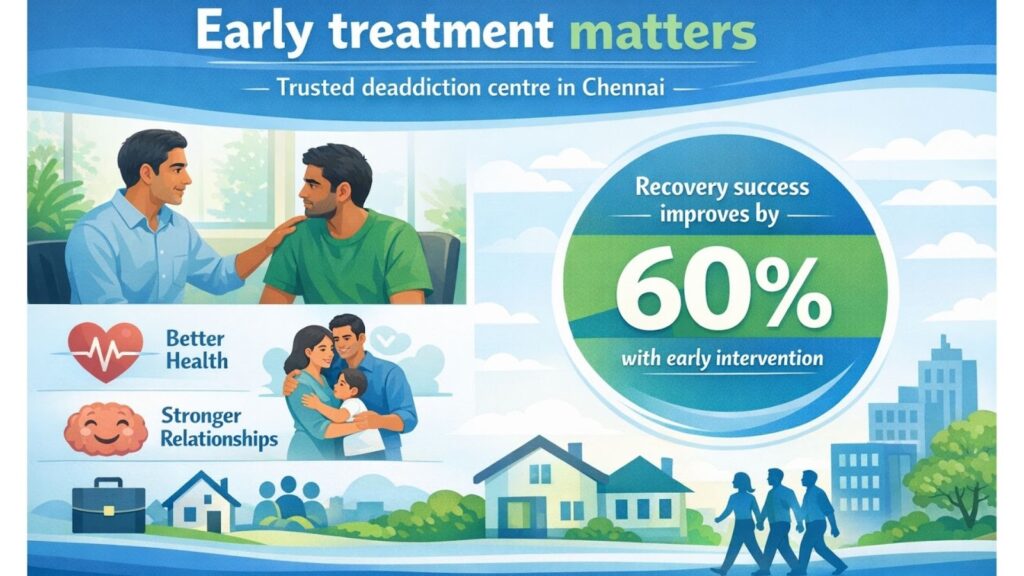
- Research shows – Early intervention increases recovery success by over 60% and reduces long-term complications.
- Hence, acting early at a trusted deaddiction centre in Chennai ensures better outcomes and supports lasting sobriety.
3. Supporting Mental Health During Recovery:
Addiction and mental health are closely connected.
- Patients may experience anxiety, depression, or stress
- Emotional challenges slow recovery.
- Trusted centres provide:
- Stress management strategies
- Trauma-focused counseling
- Confidence-building exercises
- Coping mechanisms for triggers
Thus emotional stability supports long-term sobriety.
4. Helping Families Learn and Heal:
Family involvement is essential.
- Many families feel confused or helpless.
- They may not know how to provide support.

Benefits of family counseling:
- Improves communication at home.
- Reduces conflict.
- Teaches healthy boundaries.
- Prevents enabling behaviors.
Thus, families become a positive influence in recovery.
5. Following a Daily Routine:
A structured daily routine at a deaddiction centre in Chennai builds discipline and focus during recovery. Indeed, predictable schedules help patients regain control over their daily lives.
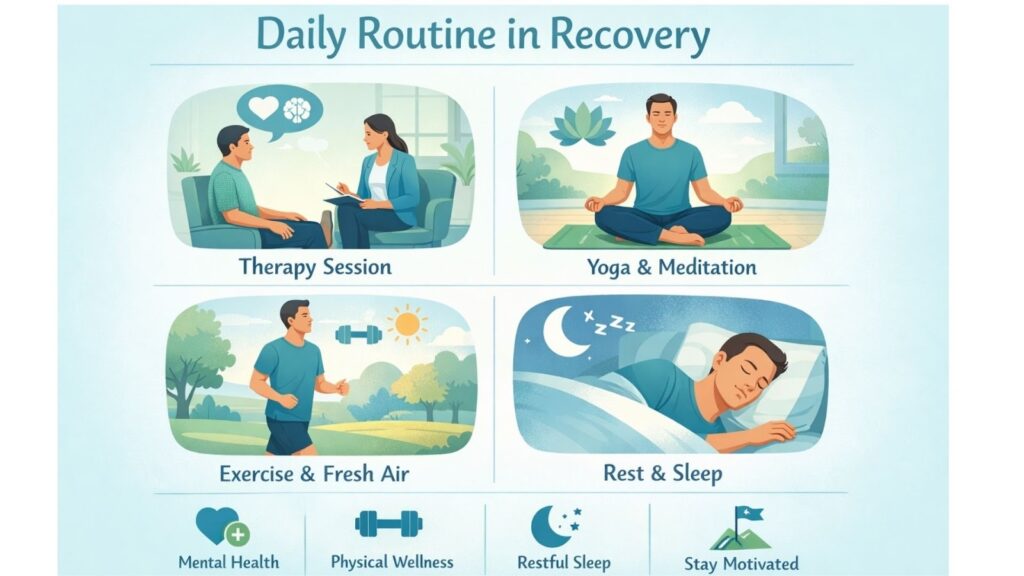
Daily Routine Includes:
- Therapy sessions – Individual, group, and family counseling for steady progress.
- Wellness activities – Yoga, meditation, and light exercise to support physical and mental health.
- Rest periods – Proper sleep and relaxation to reduce stress and restore energy.
- Additionally, Motivation stays high – Structured days create purpose and consistency.
- Supports long-term stability – Healthy routines lower anxiety, reduce cravings, and prevent relapse.
6. Eating Well and Staying Active:
Recovery involves physical healing as well as emotional growth. Yes, addiction weakens the body and reduces natural energy levels. Therefore, proper nutrition plays a vital role in restoring strength and vitality.
Key Wellness Practices:
- Balanced meals – Provide essential nutrients to support recovery and improve immunity.
- Adequate hydration – Helps cleanse the body and maintain overall health.
- Light exercise – Improves circulation, mood, and physical stamina.
- Sufficient rest – Allows the body and mind to recover fully each day.
Moreover, good physical health boosts therapy engagement, improves focus, and supports long-term recovery success.
7. Healing the Mind and Body Together:
Holistic methods support the mind, body, and spirit during recovery. Absolutely, combining these approaches with medical care enhances overall well-being.
Key Holistic Practices:
- Yoga and stretching – Promotes relaxation, reduces stress, and improves body flexibility.
- Meditation and breathing exercises – Enhances mental clarity and emotional control.
- Mindfulness practices – Improves focus, self-awareness, and decision-making.
Furthermore, holistic care complements medical and psychological treatments.
Consequently, patients achieve better emotional balance, physical health, and long-term recovery success.
8. Preventing Relapse and Handling Triggers:
Preventing relapse is a core focus at a Chennai deaddiction centre. Identifying and managing triggers early helps patients maintain long-term sobriety. Common triggers include stress, social pressure, or old habits.Therefore, patients at a deaddiction centre in Chennai learn practical coping strategies to respond calmly and confidently in real-life situations.
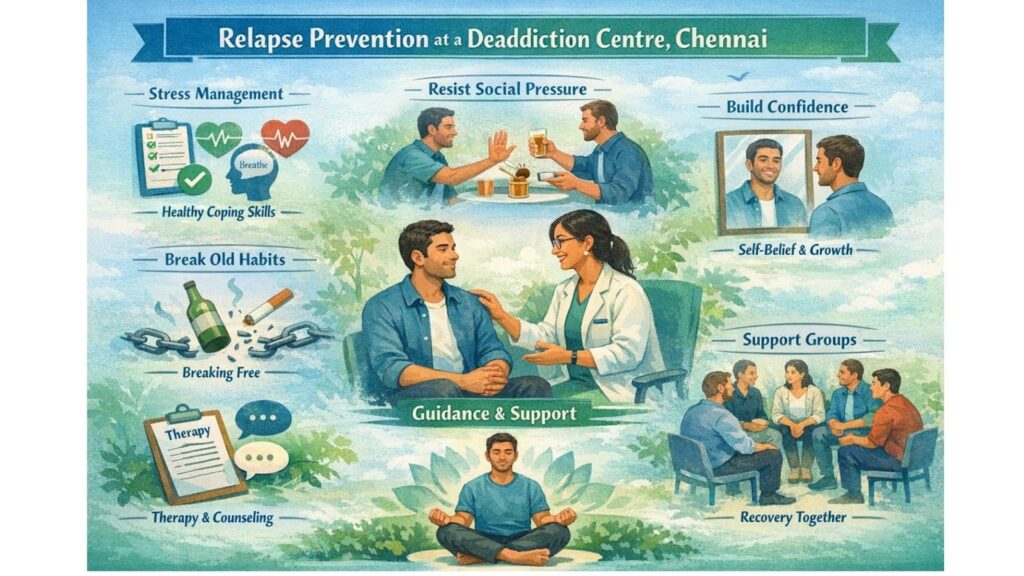
Benefits of Relapse Prevention:
- Reduces risk of setbacks – As a result, patients handle challenges without returning to harmful behaviors.
- Strengthens long-term recovery – Moreover, consistent strategies support steady progress over time.
- Increases confidence in daily life – So patients feel empowered to make healthier choices independently.
Furthermore, combining therapy, mindfulness practices, and support groups at a deaddiction centre in Chennai reinforces these skills. Hence, patients experience a more secure, stable, and lasting recovery.
9. Support from Peers and Group Therapy:
Peer support plays a vital role in recovery. In fact, sharing experiences with others helps patients feel understood and motivated. At the same time, support groups reduce isolation and foster a strong sense of community.
Key Benefits:
- To begin with, builds trust and confidence – Patients learn from peers in a safe and supportive environment.
- Moreover, provides emotional encouragement – Sharing challenges and successes boosts morale.
- Also, promotes accountability – Regular interactions help patients stay committed to recovery goals.
- Thus, patients develop stronger motivation, resilience, and social skills, all of which contribute to long-term sobriety.
10. Easing Back into Everyday Life:
Returning to society after treatment can be challenging. Of course, sudden exposure to old environments may increase relapse risk. Trusted deaddiction centres in Chennai ensure a gradual transition to reduce stress.
Support Provided:
- Routine planning – Helps balance work, therapy, and personal time.
- Follow-up counseling – Provides ongoing guidance after leaving the centre.
- Stress management – Teaches coping strategies, mindfulness, and relaxation techniques.Hence, patients re-enter life confidently, with stronger resilience and better chances of long-term sobriety.
11. Career and Life Stability:
Addiction often impacts employment. But recovery helps rebuild purpose and independence.

The Career guidance includes:
- Job readiness
- Skill development
- Work-life balance strategies
As a result, patients regain productivity and self-esteem.
12. Regular Check-Ups and Follow-Up Car:
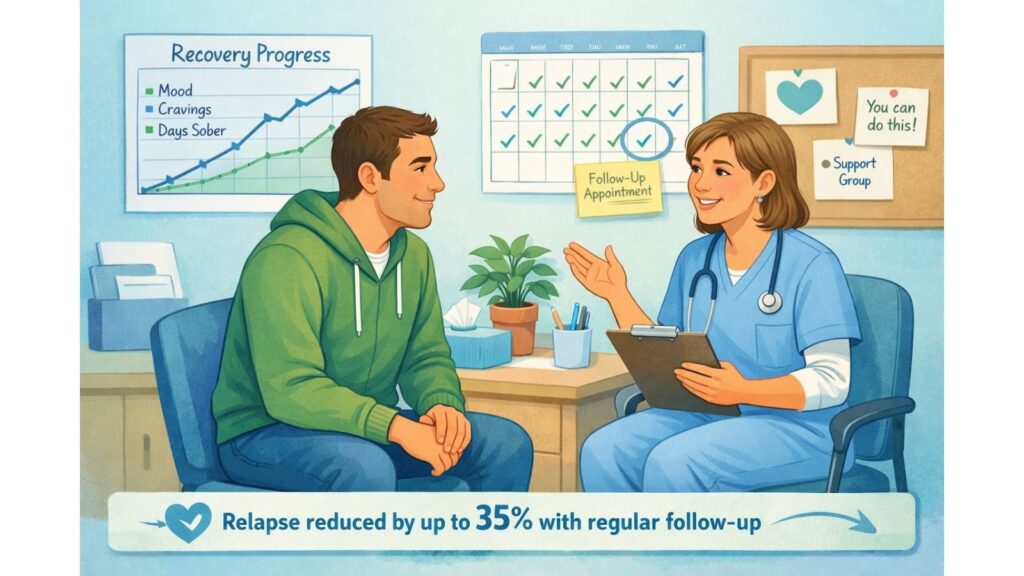
Recovery continues after discharge.
- Regular checkups track progress.
- Care is adjusted as needed.
- But, Studies shows that long-term monitoring reduces relapse by up to 35%
- Hence, patients remain engaged in still recovery.
13. Addressing Stigma and Rebuilding Confidence:
- Social stigma often delays treatment.
- However, trusted centres educate both patients and communities.
- Moreover, counseling helps rebuild self-worth and confidence.
- Thus, patients feel empowered to maintain long-term sobriety.
14. Why Local Treatment Matters:
Local treatment plays a crucial role in successful recovery. In fact, receiving care close to home improves consistency, accessibility, and support throughout the recovery journey.
Benefits of Local Treatment:
- Family involvement – Moreover, being nearby allows family members to participate actively in counseling sessions and provide emotional support.
- Easy follow-up – In addition, patients can attend regular checkups and therapy sessions without travel challenges, ensuring continuous progress.
- Cultural understanding – Furthermore, local centres understand cultural habits, language preferences, and community values, making treatment more relatable and effective.
- Community support – Similarly, patients can engage in nearby support groups and community programs, which strengthen motivation and accountability.
Therefore, choosing a deaddiction centre in Chennai not only ensures professional care but also enhances long-term recovery outcomes through local support, convenience, and cultural alignment.
15. Benefits of Professional Care for the Long Run:

Professional care delivers lasting outcomes that go beyond immediate recovery.
It provides the support, guidance, and tools needed for patients to rebuild their lives fully.
Key Benefits:
- Improved physical and mental health – Patients regain strength, energy, and emotional balance.
- Stable relationships – Furthermore, rebuilding trust with family and friends strengthens the support system.
- Productive lifestyle – In addition, life skills, daily routines, and career guidance help patients return to normal life.
- Emotional resilience – Moreover, patients learn to manage stress, triggers, and setbacks effectively.
- Most importantly, patients regain control of their lives .
- Consequently, they make healthier decisions, achieve personal goals, and maintain long-term sobriety with confidence.
- Additionally, professional care encourages continued growth, self-awareness, and a sense of independence that supports lasting recovery.
- Therefore, patients benefit not only physically but also emotionally, socially, and mentally, ensuring a truly balanced and fulfilling life.
16. Simple Tips to Stay Sober Long-Term:
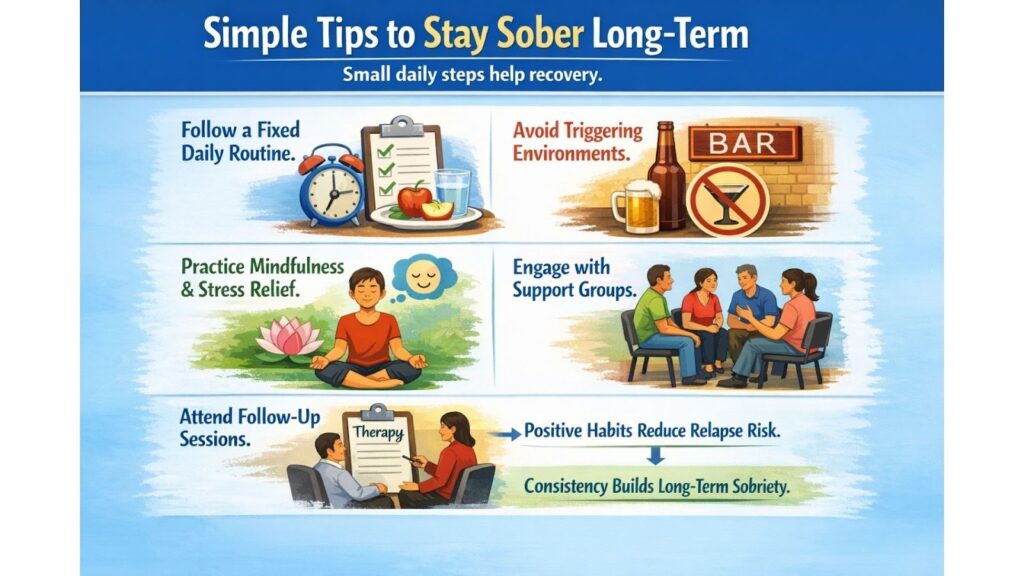
- Small daily steps help recovery.
- First, follow a fixed daily routine.
- Next, avoid environments that trigger cravings.
- Meanwhile, practice mindfulness and stress relief.
- In addition, engage with support groups.
- Finally, attend follow-up sessions.
- As a result, positive habits reduce relapse risk.
- Over time, consistency builds long-term sobriety.
Conclusion:
Recovery is a journey requiring expert care and guidance. Therefore, a trusted deaddiction centre in Chennai offers safety, structure, and continuous support. As a result, patients regain emotional and physical stability. Moreover, long-term aftercare ensures lasting results. Ultimately, choosing the right centre makes all the difference in achieving sustained recovery.
Take the first step toward lasting recovery. Now, contact a trusted deaddiction centre in Chennai today. Begin a safe, guided journey toward better health, long-term sobriety, and overall well-being.
Frequently Asked Questions(FAQS):
1. How long does treatment take?
Varies depending on addiction severity and type.
2. Is family involvement important?
Yes. Families strengthen recovery success.
3. Are treatments confidential?
Absolutely. Trusted centres maintain strict privacy.
4. Can patients continue work after treatment?
Yes, guidance is provided for a smooth return to normal life.
5. Do holistic therapies really work?
Yes, they support mental, emotional, and physical wellness.