If someone in your family needs help with alcohol or drugs, one of the hardest parts is not knowing what will actually happen once they walk through the door of a deaddiction centre. This guide walks through the stages of treatment at Ayya Care Foundation in Thiruverkadu, Chennai — from the first phone call to life after discharge — so you know what to expect and what to ask.
In short: treatment usually moves from an initial assessment, through medically supervised detox where needed, into counselling, therapy and family sessions, and finishes with a relapse-prevention and aftercare plan. The exact path and length depend on the person’s assessment — there is no one-size-fits-all programme.
When is it time to contact a deaddiction centre?
Many families wait until a crisis. You do not need to. It is reasonable to ask for an assessment when you notice patterns such as:
- needing more alcohol or drugs to get the same effect, or using more often than intended
- repeated failed attempts to cut down or stop
- shakiness, sweating, anxiety or poor sleep when not using
- missed work, college or family responsibilities
- secrecy, borrowing money or conflict at home linked to use
For more detail, read our family checklist of alcohol addiction signs or cannabis warning signs most families miss.
Urgent warning: if someone is confused, having a seizure, is very drowsy or difficult to wake, or is having trouble breathing, call 108 or go to the nearest emergency department first. Do not ask a person who drinks heavily every day to stop suddenly at home without medical advice — alcohol withdrawal can be dangerous. See when withdrawal needs urgent medical care.
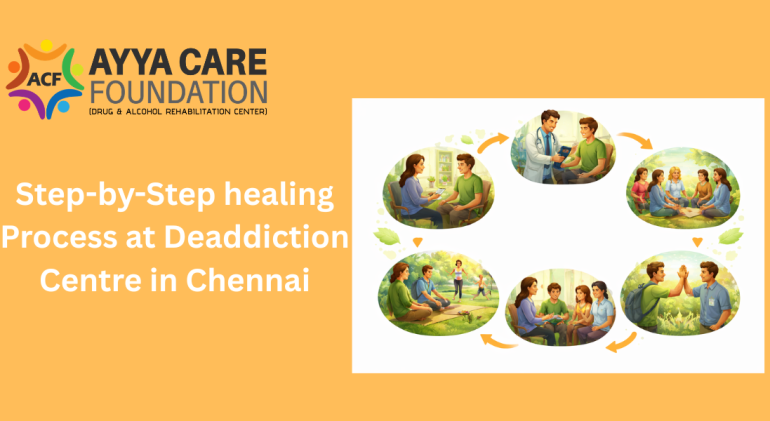
The 8 stages of treatment at a deaddiction centre
Stage 1: First contact and assessment
Treatment starts with a conversation — by phone, WhatsApp or in person. The team asks about the substance, how long and how much it has been used, physical and mental health, current medicines and any past treatment. This assessment decides whether inpatient care is needed, whether detox should be medically supervised, and which plan fits. Our step-by-step rehab admission guide explains what to bring and what to ask.
Stage 2: Admission and settling in
If inpatient care is recommended, the person is admitted to a structured, substance-free environment. Ayya Care Foundation offers 24/7 admission and ambulance pickup within Chennai. The first days focus on safety, rest, regular meals and getting used to the daily routine.
Stage 3: Medically supervised detox
For people who are physically dependent, detox is managed under medical supervision with nursing support around the clock. Withdrawal symptoms are monitored and treated, and any medication is decided by the treating clinician based on the individual assessment. The length of detox varies from person to person. Read our guide to medication-assisted treatment for questions to ask about medicines.
Stage 4: Psychological assessment and individual counselling
Once the person is physically stable, therapy begins. Our consultant psychologist, Shanthilekshmi G Iyer (M.Sc. Psychology, University of Madras), leads psychological assessment and therapy. Individual sessions explore why use started, what keeps it going, and what the person wants their life to look like. Where symptoms such as depression or anxiety are present, a psychiatric review may be part of the plan.
Stage 5: Behavioural therapy (CBT and related approaches)
Behavioural therapies help people recognise triggers, challenge unhelpful thoughts and practise new ways of coping with cravings and stress. Cognitive Behavioural Therapy (CBT) is one of the most widely used approaches. Learn more in What Is CBT? and Behavioral Therapy for Drug Addiction: CBT, DBT and what works.
Stage 6: Group therapy and peer support
Group sessions let people hear from others facing similar struggles, practise honest conversation and reduce the shame that keeps many people from asking for help. Many patients also connect with peer fellowships such as Alcoholics Anonymous — see What Is the 12-Step Program?
Stage 7: Family counselling
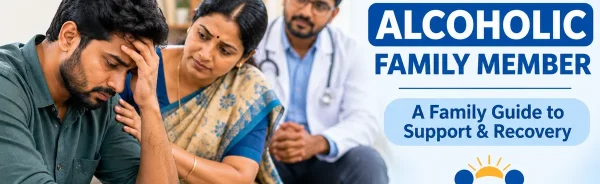
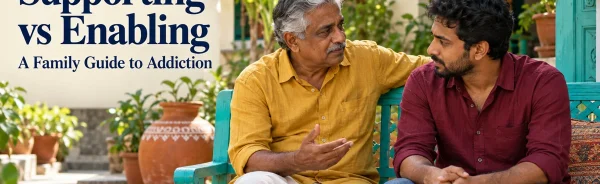
Addiction affects the whole household. Family sessions help relatives understand the condition, agree on realistic boundaries and plan how to support recovery at home without enabling. Practical guidance is in Supporting vs Enabling Addiction and visiting someone in rehab.
Stage 8: Relapse prevention, discharge and aftercare
Before discharge, the person and family build a written plan: early warning signs, coping strategies, who to call, follow-up appointments and any medicines. Recovery continues well after leaving the centre. Use our 12 questions to ask before returning home and 6 relapse-prevention strategies. A setback does not mean treatment failed — read why alcohol relapse happens.
How long does treatment take?
It depends on the substance, how long it has been used, physical and mental health, and how the person responds. Some people need a short stay followed by outpatient follow-up; others benefit from a longer residential programme. Your assessment will give a recommendation, and it should be reviewed as treatment progresses. See how long treatment takes at a rehab centre in Chennai.
How much does a deaddiction centre in Chennai cost?
Ayya Care Foundation publishes its monthly plans so families can plan ahead:
| Plan | Monthly fee | Accommodation |
|---|---|---|
| Essential Care | ₹15,000 | Common accommodation |
| Enhanced Recovery | ₹20,000 | Shared room |
| Complete Wellness | ₹25,000 | Individual room |
Ask the team to confirm what is included in your chosen plan, such as medicines, tests and family sessions. For a full comparison with other options in the city, read the real cost of alcohol addiction treatment in Chennai.
Questions to ask any deaddiction centre before admission
- Who will assess my family member, and what are their qualifications?
- Is detox medically supervised, and is nursing available 24/7?
- What does a typical day look like?
- How are families involved, and how will we receive updates?
- What is included in the fee, and what costs extra?
- What happens after discharge — is follow-up included?
- How is patient dignity and consent protected?
Frequently asked questions
What addictions does Ayya Care Foundation treat?
We provide alcohol addiction treatment, drug addiction treatment and psychiatric treatment. Contact us to discuss your specific situation.
Can someone be admitted the same day?
Admission is available 24/7, subject to assessment and bed availability. Call ahead so the team can advise on what to bring and whether ambulance pickup is needed.
Can family visit during treatment?
Visits and phone calls are arranged with the team and the person receiving care. Read our guide to visits, calls and family updates.
What if my family member refuses help?
You can still speak to the team for guidance about your own situation. Focus on safety, avoid ultimatums made in anger, and see how to support without enabling.
Talk to Ayya Care Foundation
Ayya Care Foundation is located at No 2, Gangai Amman Nagar, Pallikuppam, Thiruverkadu, Chennai 600077. Call +91 90875 77780 or message us on WhatsApp — we are available 24/7. You can also book an appointment online.
This article is general information and is not a substitute for an individual medical or psychological assessment.



01 Comments
How to Reach Addiction Treatment Centre Chennai More Easily
November 12, 2026[…] A smooth and stress-free journey encourages patients to commit fully to advanced therapy. […]